
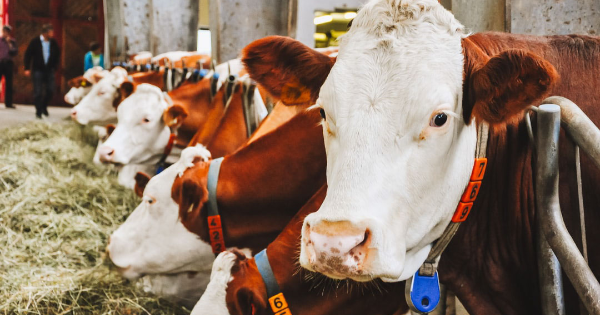
The nature of operations in dairy plants has significantly changed over the past few decades. Industry players, from the farm to the plant, are adopting automation to streamline their processes. The trend has far-reaching implications, with previously manually controlled processes now undertaken by robots. Extensive mechanization in the dairy industry still has great potential, given that new technologies are cropping up daily.
Manufacturing Execution Systems For Process Control
Automation engineering is a fast-paced industry. A few decades ago, food industry players relied on electro-mechanical relays as their default control systems. Today, this outdated technology has been replaced by manufacturing execution systems with programmable information chipsets. The storage of data bits of the production recipes in electronic memory helps food processing plants to attain optimized ‘intelligent factory’ attributes.
The Integrated Dairy Plant
Automation within the dairy industry is now geared towards a total integrated dairy plant system. An automation engineering consultant can help factories design an MES that blends all dairy processes into one seamless operation. Controllers with user-friendly interface can help plant managers track product transfer from one production section to the other.
Customized Automated Solutions
The growing range of products and product lines necessitates the need for custom controlled systems to increase a dairy plant’s economics and efficiency. No dairy plant is the same, and automation engineering systems differ on the number of production lines and recipes. Dairy industry manufacturing consultants can offer customized control solutions tailored to a factory’s needs.
How automation revolutionizes dairy industry manufacturing
1. Food Safety
Automation engineering reduces the need for human control, which eliminates the chances of human error during the production process. With increased cases of foodborne illnesses, governments are tightening the noose of industry players to ensure product safety and quality. Automated processes such as controlled cleaning within the production lines prevent contamination through unwanted mixing of products.
2. Consistent Product Quality
Automated manufacturing cells can operate for long durations with less variability, generating consistency in the products processed. The dynamic optimization of all processes that helps standardize all products leaving the plant. Controllers allow plant managers to fine-tune the production unit with defined workflows and timelines.
3. Improved Production Capacity
Automation within the dairy industry manufacturing creates robotic systems that can work at a constant rate, 24 hours a day, unlike human labor. The machines can hit high-efficiency figures of up to 90% uptime. Introduction of new product lines without necessarily affecting on-going operations can help increase capacity within the plant.
4. Better Production Control
Integrated systems such as the Manufacturing Execution System can help dairy farms and plants to have precise control over their production processes. The information management systems generate automated reports of the production data for effective planning and optimization of plant processes.
5. Traceability
Automation of your production lines allows for effective tracking of products. You can create an inventory tracking that begins at the reception area of the raw materials, through the production systems and batch tracking of the finished products. It helps in easier tracing and investigation of defective products that may end up on the shelves.
Automation in daily industry manufacturing helps businesses adopt effective practices that improve production control while increasing its capacity. It can also help to minimize errors on the production floor as well as support production consistency. Project Group Consulting can help design an MES model that will propel your business to success.
 Pamela began her professional career in the broadcast industry while attending Tarleton State University. After graduating with a B.S. in Speech Communication in 1997, she worked at several radio stations in management roles focusing on continuity, music and production as well as serving as an on-air talent continuously for more than ten years. In 2010, Pamela accepted a position as the Assistant Marketing and Development Director for the Eisemann Center in Richardson, TX. Helping to promote, market and develop the City of Richardson’s performing arts center, she succeeded in implementing and managing all social media marketing as well as creating and directing a first-ever student art exhibit, further strengthening her marketing and organizational talents.
 Jason Krueger is the Director of Ranch and Real Estate Development for The Project Group Consulting, LLC. Jason has been managing and developing ranches for greater than 14 years, and has extensive sales management experience in the construction industry dating back to the late 90s. He is also a Wildlife Biologist/Ecologist with a B.S. in Wildlife Ecology from Texas A&M University in College Station.
 Bryant began his career at Crepaco warehouse in parts distribution and pump assembly. Then he progressed to field installation for process and ammonia systems where he oversaw welding and fitting both sanitary tubing and ammonia piping systems.He then moved to San Antonio, spent a year as a contract fabricator with H-E-B Foods working for Sanitary Welding Services. At the end of his contract he returned to the DFW area with Alloy Equipment doing installation, crew management, and scheduling. There he remained through the buyout by Statco Fabrication and Engineering, which resulted in his 25 combined years with them moving into engineering and sales departments.
 With more than 25 years in the food and beverage industry and extensive experience as a project manager, Tony has planned and led multi-million dollar projects relating to system upgrades, equipment installation, water quality, validations and process improvements. Some of his areas of expertise include project planning, quality assurance, process analysis, manufacturing systems, process design and problem resolution.
 Tim is an electrical and control systems engineer with more than ten years of experience in a wide variety of industries. Project experience includes working with clients in the water/wastewater fields, pharmaceutical, cosmetics and food and beverage industries. Prior to his engineering work, Tim was a licensed water treatment plant operator in Texas. Tim’s strengths are process engineering, control system design, conveyor system design, and project management. He received his B. S. in Electrical Engineering from the University of Texas at Arlington. In his spare time, Tim enjoys working on cars, golfing, and billiards.
 Michael has thirty-five years of diversified experience in project management and engineering, equipment and systems design, and manufacturing and production. Michael holds a Bachelor of Science degree in Mechanical Engineering from Texas A&M University.